When homeowners walk into an older Philadelphia property that needs significant work, one of the first questions is often whether the house should be completely gutted.
Removing every wall and ceiling can make a project feel cleaner and more predictable. But a full gut is not automatically the right approach for every renovation.
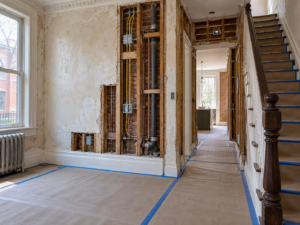
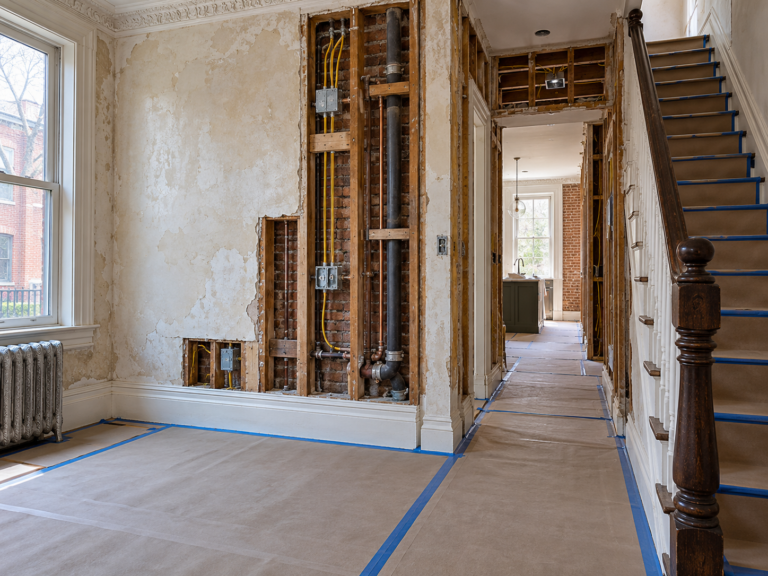
In many rowhomes, selective demolition can preserve serviceable framing, plaster, flooring, architectural details, or recently updated mechanical systems while still giving contractors access to the areas that require major improvement.
The correct demolition strategy depends on what the renovation is trying to accomplish and what conditions are hiding behind the finishes.
What Is Selective Demolition?
Selective demolition means intentionally removing specific building components rather than stripping the entire interior to the structural shell.
That could include opening the kitchen walls while leaving an adjoining living-room ceiling intact, removing damaged plaster only where plumbing needs replacement, opening strategic sections of a basement ceiling to inspect joists, or removing one bathroom down to framing while leaving neighboring rooms untouched.
The advantage is straightforward: materials that are still useful do not have to be demolished and rebuilt unnecessarily.
Noam Construction’s construction and remodeling services in Philadelphia include major renovations where demolition, framing, building systems, and finishes must be coordinated as one scope.
When a Full Gut Begins to Make More Sense
Selective demolition becomes less practical when major systems need access throughout the house.
For example, if a renovation includes substantial rewiring, extensive plumbing replacement, HVAC changes, major structural alterations, insulation upgrades, and a complete layout redesign, preserving isolated wall and ceiling sections may create more complexity than savings.
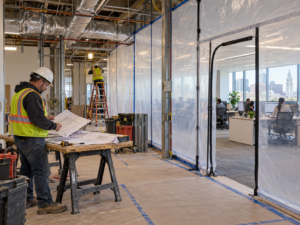
The project team may spend significant time protecting small areas while repeatedly opening adjacent surfaces for different trades.
A full gut can also make sense where existing finishes are heavily deteriorated or where previous renovations have created inconsistent conditions throughout the building.
The decision should come after inspection and scope development—not simply because the house is old.
Hidden Conditions Often Drive the Decision
A rowhome can look relatively intact while concealing decades of repairs.
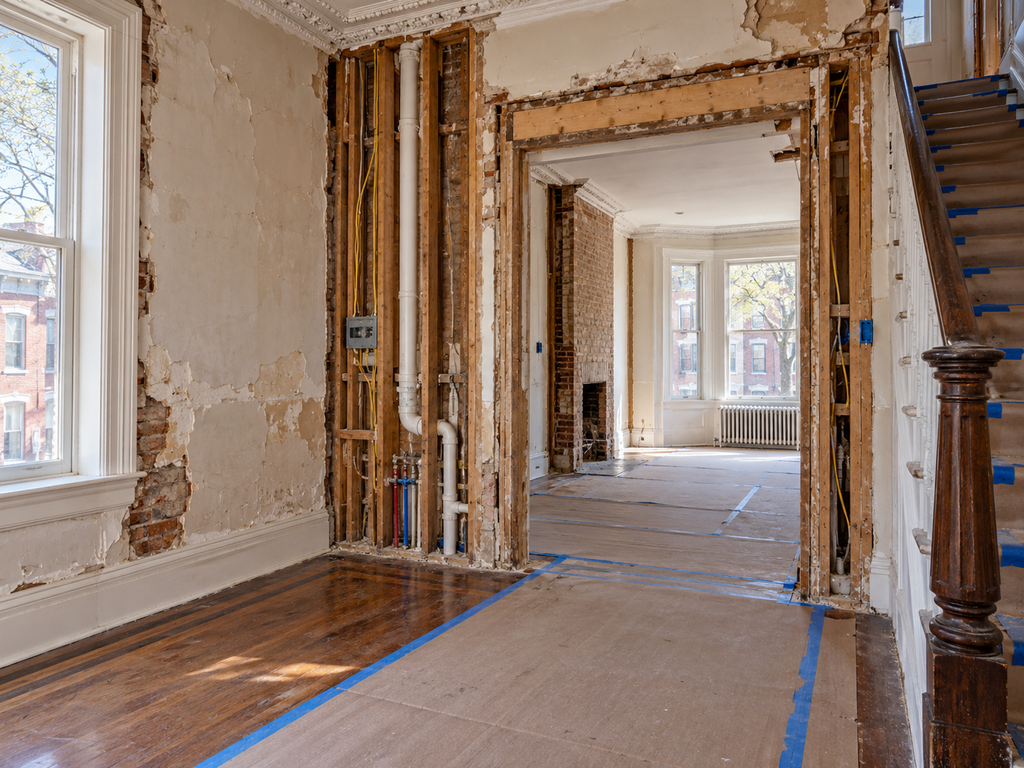
Once limited demolition begins, contractors may discover altered joists, abandoned wiring, old plumbing, patched framing, moisture damage, missing fire blocking, or multiple finish layers.
That does not mean every discovery requires complete demolition.
It means the project needs a process for determining whether the newly exposed condition affects the surrounding scope.
Strategic exploratory openings before final pricing can sometimes provide better information without removing everything.
Preserving Original Materials Can Be Worthwhile
Older Philadelphia houses often contain materials that are difficult or expensive to reproduce.
Original stair parts, decorative trim, hardwood flooring, plaster details, interior doors, brickwork, and other features may contribute substantially to the character of the house.
If those components are in serviceable condition and do not interfere with necessary construction, protecting them may produce a better finished renovation.
Preservation, however, should not prevent contractors from accessing structural or mechanical problems that require attention.
Demolition Should Follow the Final Layout
Starting demolition before the design is reasonably developed can create unnecessary work.
If the location of bathrooms, kitchens, stairs, door openings, mechanical equipment, and major structural changes is still undecided, contractors may remove surfaces that ultimately did not need to be disturbed.
A stronger process is to coordinate design, existing conditions, trade requirements, and demolition zones before heavy work starts.
That is particularly important when structural walls are involved.
More Demolition Does Not Eliminate Every Surprise
A common assumption is that a full gut removes all uncertainty.
It does not.
Foundation conditions, buried plumbing, party-wall conditions, joist pockets, concealed exterior deterioration, and other issues may remain hidden even after most interior finishes are removed.
The purpose of demolition is access—not a guarantee that every future condition becomes predictable.
Consider Disposal, Protection, and Rebuilding Costs
Demolition itself is only one part of the cost.
Everything removed must generally be disposed of, replaced, finished, painted, and integrated with adjacent construction.
If a perfectly serviceable ceiling is removed, the budget has to include not only demolition but new drywall or plaster, finishing, primer, paint, fixtures, trim transitions, and labor from multiple trades.
Selective demolition can sometimes reduce those secondary costs.
Philadelphia Permit and Safety Considerations
Large renovation projects may involve permits depending on structural, plumbing, electrical, mechanical, and other work.
Homeowners can review current municipal information through Philadelphia’s building and repair permit guidance.
Older buildings may also require special attention to materials such as lead-based paint and potentially hazardous components uncovered during construction.
The Best Demolition Plan Is Scope-Driven
The correct question is not simply, “Should we gut the house?”
A more useful question is: What needs to be exposed so this particular renovation can be built correctly?
For one property, the answer may be nearly everything.
For another, preserving substantial portions of the house may save time, money, and original character without compromising the project.
FAQ
Is selective demolition cheaper than a full gut?
It can be, especially when substantial existing finishes and systems can remain. The result depends on access requirements and the final renovation scope.
Can contractors discover structural problems after selective demolition begins?
Yes. Concealed conditions may become visible only after finishes are opened.
Should demolition start before architectural plans are complete?
Limited exploratory openings may be useful, but major demolition is generally easier to control once the intended layout and project scope are defined.
Can original plaster be preserved during a major renovation?
Sometimes. Its condition and the amount of required work behind it should determine whether preservation is practical.
Planning a major Philadelphia renovation? Noam Construction can help determine how much of the building actually needs to be opened before unnecessary demolition becomes part of the budget.