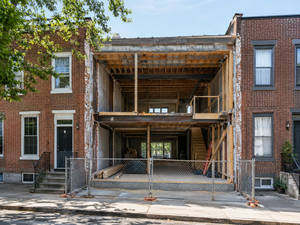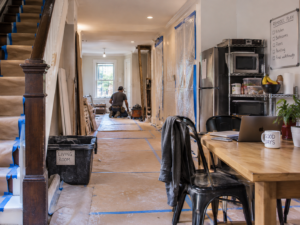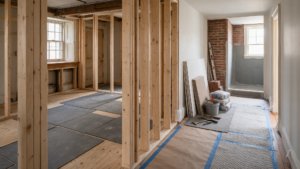

Philadelphia rowhomes are tough—but winter exposes every weak spot: drafts, uneven floors, old framing surprises, and moisture that can ruin finishes if the sequence is wrong. If you’re planning a remodel in Fishtown, Queen Village, Port Richmond, South Philly, or Fairmount, this checklist will help you structure the project so the work stays clean, code-ready, and durable.
Start With a Real Scope (Not Just “We’ll Figure It Out”)
Before demo, confirm:
- Which walls are staying vs. moving (load-bearing concerns)
- Any ceiling sag, floor bounce, or prior “patchwork” framing
- Where mechanicals run (plumbing stacks, venting, electric pathways)
- What finishes you want (tile, hardwood, LVP, trim profile)
A tight scope prevents the two biggest killers: change orders and trade conflicts.
Framing & Structural Prep: The Invisible Win
In older homes, framing work is often the difference between a remodel that looks good for 6 months vs. 6 years. Typical winter renovation framing includes:
- Straightening bowed walls (fur-outs, sistering, blocking)
- Rebuilding damaged sill/joist areas from long-term moisture
- Opening layouts safely (headers, posts, proper fastening)
- Reinforcing subfloors so they don’t squeak or dip under new flooring
Pro tip: don’t install finishes over questionable framing “because it looks fine.” Rowhomes hide problems until temperature + humidity swings bring them out.
Drywall: Smooth Walls Need the Right Process
Drywall quality is mostly about prep and sequence:
- Proper fastening and spacing
- Clean corners and reinforced seams
- Skim coat where needed (especially when tying into old plaster)
- Dust control so your paint and trim don’t look gritty
If your renovation includes new lighting, make sure wiring and rough-ins are approved before walls close.
Flooring: Don’t Install Over a Bad Subfloor
In Philly renovations, flooring failures usually come from skipping the subfloor step. Your checklist should include:
- Subfloor inspection (soft spots, rot, uneven transitions)
- Leveling compound only where appropriate
- Moisture checks (especially near exterior walls and basements)
- Correct underlayment for LVP, hardwood, or tile
For winter projects, humidity control matters—your materials should acclimate before install.
Finish Carpentry & Final Details
This is where the house stops looking like a jobsite:
- Door installs that actually latch correctly
- Clean trim lines and consistent reveals
- Stair repairs and railing safety updates
- Caulking + paint prep that makes everything look “new,” not “patched”
If you’re comparing “general contractor near me” options, ask how they handle punch lists, not just the main build.