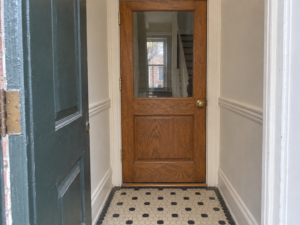
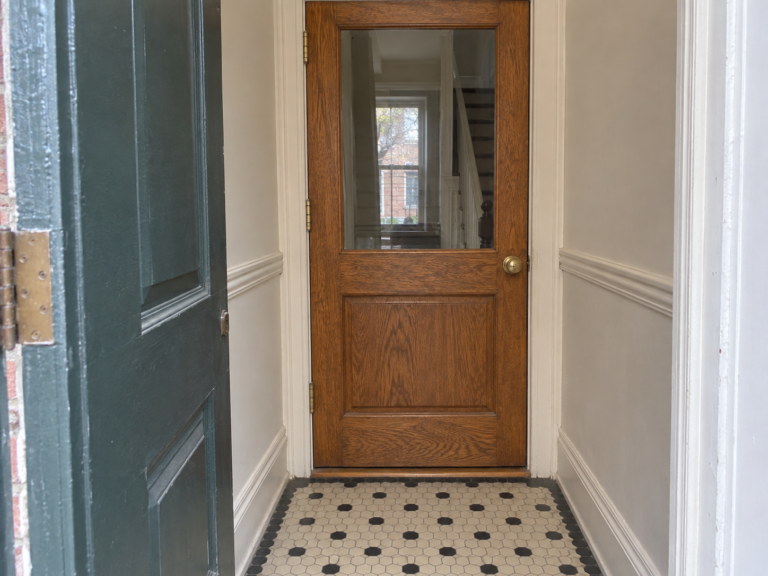
A vestibule restoration can make a drafty Philadelphia rowhome entry more comfortable without sacrificing its original woodwork. In Queen Village and Fairmount, a short tiled passage sometimes separates the street door from a glazed inner door. That second door is easy to prop open all summer. On the first cold evening when holiday guests arrive, it becomes clear why it was there.
The first question at a walkthrough is simple: Do you feel cold air with both doors shut, or mainly when someone comes in? The answer helps separate a loose seal from a layout problem. It can also keep a modest repair from turning into an unnecessary rebuild.
Why Vestibule Restoration Starts With the Two Doors
A two-door vestibule limits the direct path from the street to the living room when one door stays closed as the other opens. It won’t do much if people have to open both doors at once to get through. Likewise, a closed door won’t block drafts well if air can pass under it or around the frame.
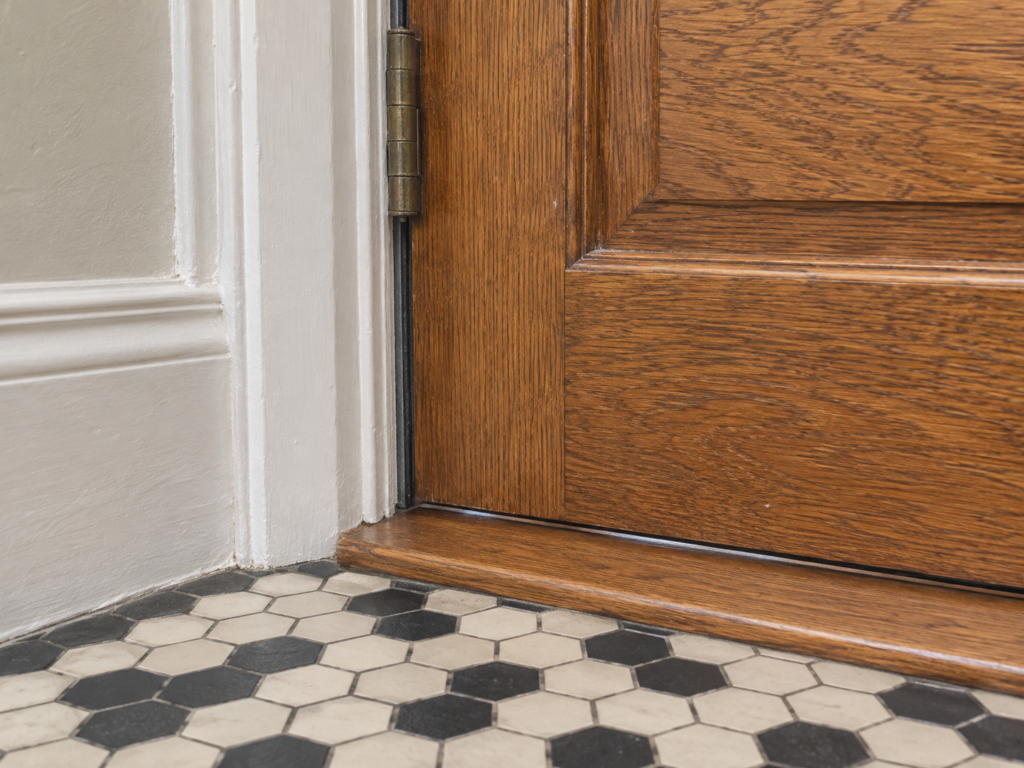
In an older rowhome, several repairs over the years can change how the entry works. New tile can raise the floor and make a door drag. A loose hinge can pull a door out of alignment at the latch. A worn threshold can leave a gap even when the door otherwise fits well.
The U.S. Department of Energy’s exterior door guide lists visible daylight and loose door fit as clues to air leakage. It also recommends correcting loose hardware before adding weatherstripping. That order matters: A thicker seal won’t straighten a crooked door.
What a Vestibule Restoration Inspection Checks
A contractor should operate each door independently, then walk through the vestibule both ways. It helps to reenact a normal trip with a bag of groceries or a guest standing inside. That shows where the two swings, the landing and everyday traffic compete for space.
- Door fit and hardware. Check whether each door latches without a shove. Look for worn hinge screws, rub marks and uneven gaps that point to a sagging door or a shifted frame.
- Thresholds and tile. Check whether the threshold moves underfoot, the tile stops cleanly at the jambs and the door clears the floor. At the street door, look for where rain or melting snow goes.
- Moisture and wood condition. Compare both sides of the entry, especially the lower ends of the jambs. Soft wood and recurring stains call for finding the source before covering the damage.
- Details worth keeping. Record the original glass, trim and hardware before any work. Photos during selective opening can show what was concealed, and final photos can document the repaired joints and finishes.
Targeted Repair vs. Full Replacement
A targeted repair makes sense when the door and frame are sound and the problem is limited to one or two points. A contractor may realign a latch, refit the hinges or replace a worn sweep. A damaged threshold can sometimes be replaced without removing the door or disturbing the surrounding tile.
A full replacement makes sense when a severely warped door no longer fits, or when widespread decay leaves too little sound wood for a reliable repair. That may mean replacing just the outer door and its frame, not both doors. When the floor and framing are also damaged, a broader rebuild lets the contractor resolve the moisture path before putting new wood back.
Ask for two scopes if there’s a real choice. Each should state what stays, what comes out and whether any tile or trim will need patching. If the project changes the exterior opening or affects a historically designated property, check approval requirements before ordering materials.
Warning Signs You Can Spot From Inside
On a windy day, close and latch both doors normally. From the vestibule, look for a line of daylight at the outer door and note where you feel moving air. A draft along the jamb points to a different spot than a draft across the floor. Note which door is hard to latch and whether the problem is worse after rain.
From inside or on level ground, look for fresh staining at the lower corners and loose tile next to the threshold. Take a photo after wet weather if the mark comes and goes. If either door binds enough to make leaving difficult, or a threshold shifts when stepped on, arrange an assessment promptly.
Frequently Asked Questions
Can I keep the original glass in the inner door? Possibly. A contractor can check the glass, the wood that holds it and any applicable safety glazing requirements. If the pane needs replacement, ask about options that retain the proportions of the original door.
Should I weatherstrip both doors? Not automatically. Fix obvious gaps and poor fit at the exterior door first. Then check whether adjustments to the inner door would improve comfort without making the door hard to operate.
Can I keep the tile if the threshold needs work? Often, if the adjacent tile and its base are sound. Have the contractor identify the joint and explain how they’ll protect the surrounding tile. If that area hides water damage, some tile may need to come up for a durable repair.
Plan Your Rowhome Entry Repair With Noam Construction
If a cold draft is coming through your entry in Queen Village, Fairmount or South Philadelphia, start with a walkthrough of both doors. Noam Construction can help you decide what’s worth keeping and what needs repair. Explore our full-house renovation services and exterior services, or contact Noam Construction to discuss your vestibule.