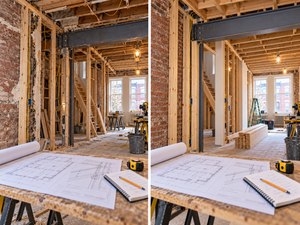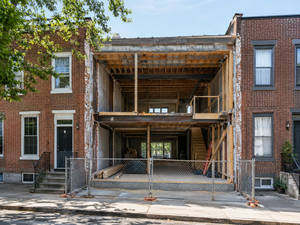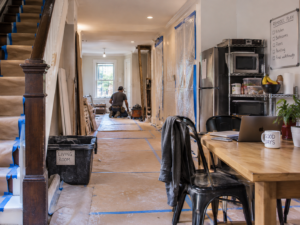
When renovating a historic townhome in densely packed neighborhoods like Old City and Society Hill, the most critical architectural features are the ones you share with your neighbors. Party walls—the continuous masonry structures that divide adjacent rowhomes—require specialized care during a major remodel. Altering, exposing, or reinforcing these shared walls involves strict building codes, structural engineering, and careful coordination to ensure both your home and the adjacent property remain safe and undisturbed.
The Anatomy of Historic Brick Party Walls
In 18th and 19th-century Philadelphia architecture, party walls were typically constructed of multiple wythes (layers) of red brick. These walls bear the structural load of the floor joists for both adjoining properties.
Exposing Interior Brick
Many homeowners desire the industrial, historic aesthetic of exposed interior brick. However, exposing a party wall is not as simple as tearing down the plaster. The brick and mortar must be carefully inspected. Old lime-based mortar often deteriorates into a powdery sand after decades of trapped moisture. Before sealing the brick, the joints must be professionally repointed using a historically appropriate, breathable mortar mixture. Using modern, rigid Portland cement can trap moisture and cause the antique bricks to spall and crack under pressure.
Soundproofing and Privacy Upgrades
A common complaint in rowhomes is the transmission of noise through shared walls. If the plaster is removed during a gut renovation, it provides an excellent opportunity to upgrade the acoustic privacy of the home. Contractors achieve this by building an independent, decoupled stud wall slightly offset from the brick party wall. This new cavity is filled with high-density acoustic mineral wool insulation and finished with specialized sound-damping drywall, drastically reducing airborne and impact noise from the neighboring unit.
Structural Interventions and Underpinning
When a renovation involves deepening a basement for higher ceilings or adding a heavy rear addition, the foundation of the party wall must be addressed.
The Underpinning Process
If you plan to dig down into your basement, you cannot simply excavate below the existing foundation footing, as this would cause the shared party wall to collapse. A complex structural procedure called underpinning is required. Engineers excavate small, alternating sections beneath the existing foundation and pour new, deeper concrete footings. This process must be meticulously planned and executed to safely transfer the load of the building downward. The Philadelphia Department of Licenses and Inspections (L&I) heavily regulates underpinning, requiring detailed engineering plans and special inspections to protect adjacent properties.
Fire Rating Compliance
Party walls serve a critical life-safety function: preventing the spread of fire between townhomes. During a major remodel, any breaches in the party wall—such as those created by old chimney flues or joist pockets—must be properly sealed with fire-rated masonry or specialized fire-blocking expanding foam. Municipal inspectors strictly enforce fire-separation codes to ensure the structural barrier remains intact.
Expert Management for Complex Structures
Renovating along a shared property line requires surgical precision, deep knowledge of historic masonry, and seamless municipal coordination. Attempting DIY demolition near a party wall risks catastrophic structural failure and severe legal liability. For safe, engineered solutions in historic properties, rely on our team for complete structural renovation in Philadelphia. Contact Noam Construction Philadelphia to assess your property’s structural needs today.
FAQs:
- What is a party wall in a rowhome? A party wall is the shared structural wall that divides two adjacent townhomes or rowhouses. It supports the floor joists and roof structures of both properties.
- Can I safely expose the brick on a shared party wall? Yes, but the mortar must be inspected and likely repointed. A breathable masonry sealer must also be applied to stop brick dust from entering the living space.
- Is a permit required to work on a party wall? Yes. Any structural modification, underpinning, or significant alteration to a party wall requires engineered drawings and strict building permits to protect both adjoining properties.