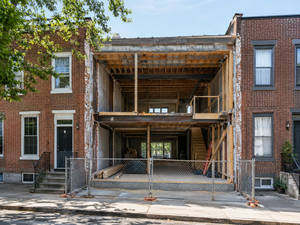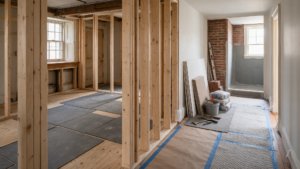
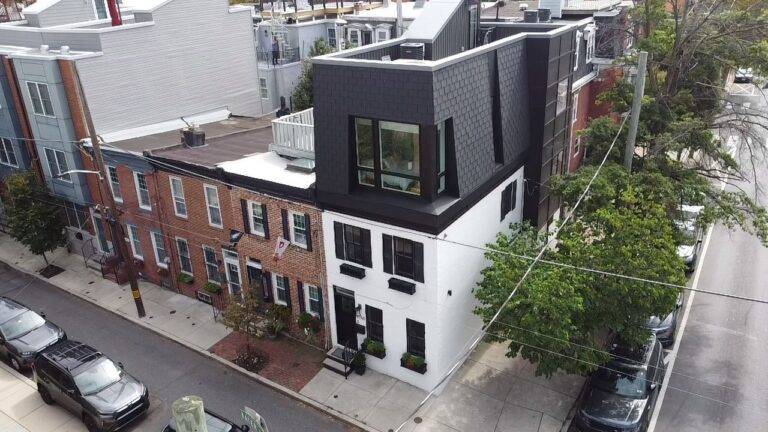
Philadelphia winter is brutally honest. Drafts show you where air is leaking. Stains show you where moisture is traveling. Floors creak louder when subfloors are loose. And “small” electrical issues suddenly become obvious when heaters run, lights flicker, and older circuits are pushed harder than they were in summer.
That’s why winter is the best time to do what we call scope verification—the pre-construction process a licensed general contractor in Philadelphia uses to confirm what’s really happening behind finishes before you spend money on design, materials, and labor. Done correctly, scope verification reduces change orders, protects inspections, and keeps your renovation moving.
If you’re planning a full home renovation, major layout change, or rowhome remodel in neighborhoods like Fishtown, Queen Village, South Philly, Port Richmond, Northern Liberties, Fairmount, Graduate Hospital, and Center City, this checklist is the difference between “smooth build” and “why is this taking so long?”
What “Scope Verification” Means
Scope verification is a GC-led review of the house as a system—structure, envelope, mechanicals, and code risks—so the project plan matches reality.
Instead of guessing, we verify:
- Moisture pathways (roof/flashing, masonry, stucco transitions, windows, basements)
- Framing and structure (joist spans, sagging, sistering needs, bearing walls)
- Subfloors and leveling (quiet floors, tile readiness, cabinet alignment)
- Electrical capacity and safety (service size, panel, grounded circuits, GFCI/AFCI needs)
- Plumbing routing (old supply lines, drain pitch, venting constraints)
- Insulation/air sealing (comfort + energy + condensation risks)
- Permit and inspection triggers (so the schedule doesn’t get blindsided)
Winter conditions make these issues easier to identify because the home is under stress—temperature swings, freeze/thaw, higher interior heat loads, and more visible condensation patterns.
Winter Scope Verification Checklist for Philadelphia Rowhomes
1) Building Envelope: Where Water and Air Actually Get In
Before you remodel anything, verify the envelope—because moisture wrecks drywall, trim, flooring, and paint fast.
Verify:
- Roof edge details, penetrations, and flashings (especially around chimneys and valleys)
- Window head flashing and sill conditions
- Masonry cracks, deteriorated mortar, missing sealant lines
- Bulk water entry points (rear additions, roof decks, party wall transitions)
What winter reveals:
- Active staining that wasn’t visible in dry months
- Draft lines around windows/doors that create comfort complaints later
- Condensation patterns that hint at hidden air leaks or insulation gaps
2) Structure + Framing: Don’t Assume Walls Are Straight
Older Philly housing stock often has “character” that becomes a problem once you install cabinets, tile, or new doors.
Verify:
- Floor joist deflection (bounce) and localized dips
- Wall straightness where you’ll install cabinets, tile, or built-ins
- Bearing conditions if you’re opening a layout
- Stair framing and header conditions (common surprise zones)
Scope verification goal:
Set the project up for clean reveals, aligned cabinetry, and predictable finish work—without midstream “we didn’t know the wall was out of plumb.”
3) Subfloor + Leveling: The Hidden Driver of Finish Quality
Most “why does my floor look off?” problems start below the finish.
Verify:
- Subfloor thickness, fastener patterns, squeaks, soft spots
- Tile areas (kitchen/bath) that need stiffening and proper underlayment
- Transitions between old joists and newer additions (uneven planes)
Winter advantage:
When homes dry out, movement is more obvious. That’s when you can identify where leveling or reinforcement will prevent cracked grout, loose tile, and wavy floors.
4) Electrical: Capacity, Safety, and Inspection Risk
Electrical isn’t just “new lights.” It’s service, load planning, and code compliance.
Verify:
- Service size and panel condition (space for new circuits)
- Grounding and bonding
- Dedicated circuits needed for kitchen loads and modern appliances
- Placement planning so drywall isn’t opened twice
Why this prevents change orders:
If you discover panel limitations late, you end up reworking layouts, moving outlets, and adding costs when walls are already open.
5) Plumbing Routing: The Real Constraint Behind “Simple” Layouts
A dream kitchen or new bath layout still has to respect drain pitch, venting, and existing stack locations.
Verify:
- Supply line condition (galvanized, copper transitions, shutoff access)
- Waste and vent routing constraints
- Drain pitch feasibility for new fixture locations
- Basement/utility access for re-routes
Rowhome reality:
Narrow footprints and stacked plumbing chases mean some “easy” changes become major work—unless planned correctly from the start.
6) Permits + Inspections: What Triggers What
A professional general contractor in Philadelphia plans the build around the inspection sequence, not just aesthetics.
Verify:
- Which scope items require permits (structural, electrical, plumbing)
- What inspections will be needed and when
- Whether the project triggers energy or safety upgrades (common in older homes)
Result:
You avoid timeline blow-ups caused by “we need to change this now to pass inspection.”
A GC’s “Pre-Construction Plan” That Keeps Renovations Predictable
Once scope verification is done, the build plan becomes clean and controllable:
- Clear scope: what’s included vs excluded (no gray areas)
- Sequencing: demo → rough-ins → inspections → insulation → drywall → finishes
- Budget protection: fewer surprises, fewer reactive decisions
- Quality control: straight surfaces, aligned finishes, durable assemblies
This is the difference between a renovation that looks good on day one and a renovation that stays solid for years.
Neighborhood Fit: Why Philly Homes Need a Philly-Specific Process
Renovating in South Philly, Fishtown, Port Richmond, Queen Village, Northern Liberties, Fairmount, and Center City is not the same as renovating a newer suburban build. Rowhomes have:
- tight mechanical routes
- shared/party wall considerations
- additions layered on top of older structure
- historic materials and older framing tolerances
Winter scope verification is how you treat a Philly home like the system it is.
FAQs
How early should I do scope verification before starting a full renovation?
Ideally before finalizing materials and layout. The earlier you confirm structure, moisture, and mechanical constraints, the fewer revisions you’ll need.
Does scope verification mean opening walls?
Not always. Many issues can be identified through targeted access points, basements/utility areas, and visual/thermal clues. If selective openings are needed, they’re planned—so you don’t “accidentally demo” later.
Why is winter better than spring/summer?
Cold weather and temperature swings make drafts, condensation, and moisture pathways more visible, revealing problems that warm weather can hide.
Will this reduce change orders?
It won’t eliminate every unknown, but it dramatically reduces the common “we didn’t see that coming” problems—especially in older rowhomes.
- Rowhome renovation planning
- Winter renovation planning
- Winter rowhome renovation checklist
- Full-home renovations / investment property remodeling
- Blog hub
https://noamconstructionphiladelphia.com/blog/
Want fewer surprises during your renovation? Winter drafts and cold spots are your best early warning system. Start by reviewing the U.S. Department of Energy’s air-sealing guidance, then let a Philadelphia general contractor verify the real leakage points, insulation gaps, and moisture risks before demo begins.
Ready to plan it the right way? Schedule a scope verification walkthrough to protect your budget, timeline, and finish quality.