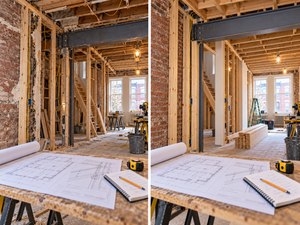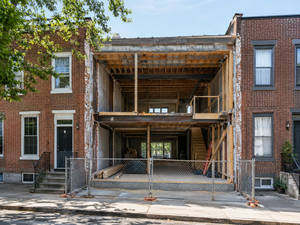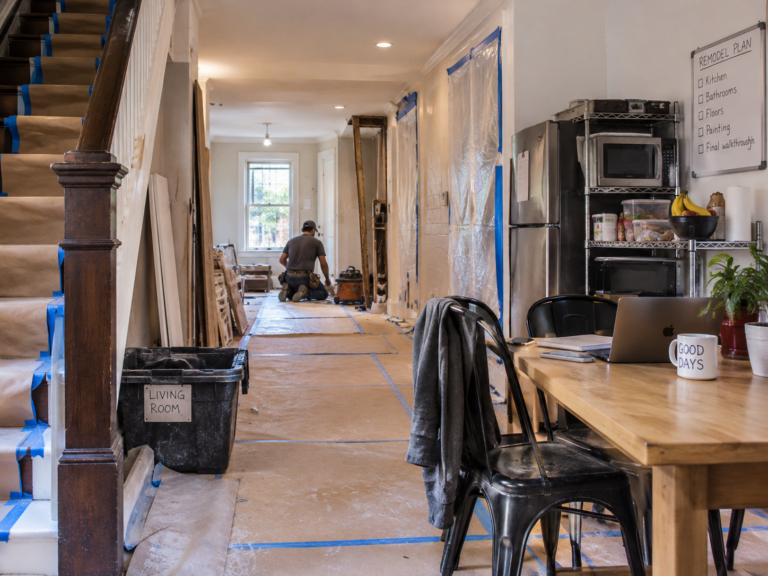
Living in your home during a renovation changes the project’s planning requirements. The work must be coordinated around construction access, household routines, temporary facilities, and the areas that can remain available.
For a Philadelphia rowhome renovation, the decision should be based on the actual scope. Remaining in place may be workable for some phases and unsuitable for others. Agree on the approach before construction begins.
Identify the rooms you need to keep using
List the spaces your household relies on every day, including bathrooms, sleeping areas, kitchen facilities, and workspaces. Discuss how each will be affected and whether temporary arrangements are realistic.
A phased plan should explain what becomes unavailable, when that happens, and what work must be completed before the space returns to use. Avoid assuming a second bathroom or a makeshift kitchen solves every access issue.
Plan the routes through the house
Material deliveries, waste removal, and trade access may use the same entrances and narrow passages as occupants. Review those routes along with protection of areas outside the construction zone.
Ask how work areas will be separated and how changes to the boundary will be communicated. Storage should also be planned: furniture, household belongings, and construction materials all compete for space.
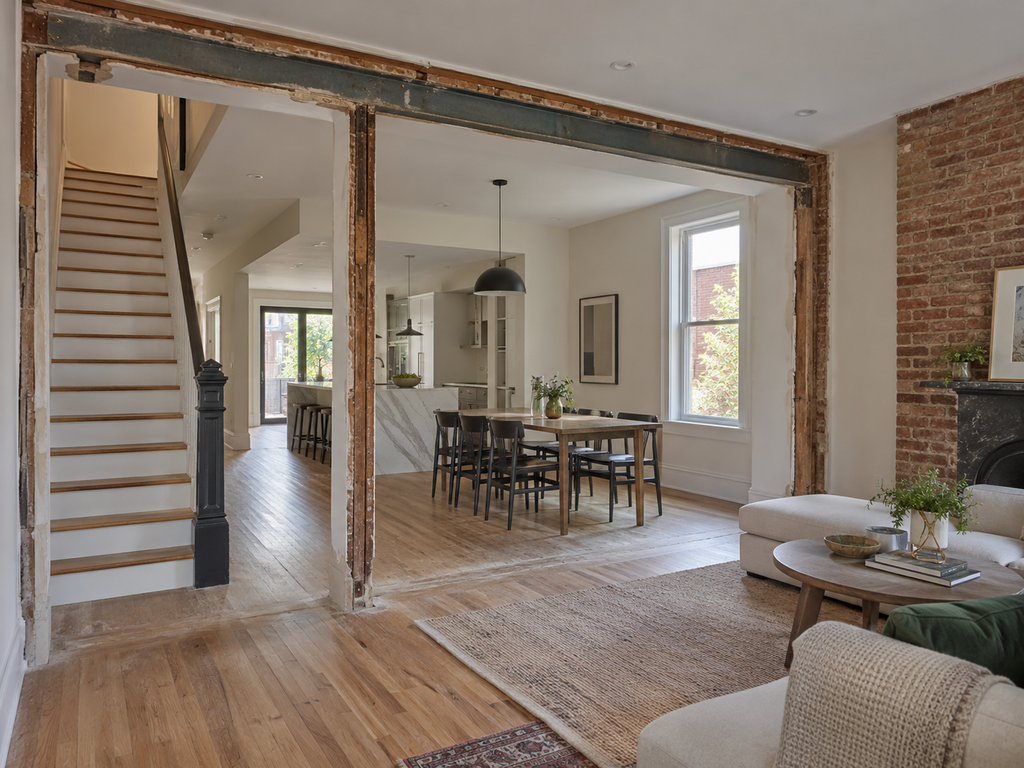
Discuss disruption as part of the scope
Noise, dust, temporary utility interruptions, and restricted access can affect daily life even when the work is confined to a few rooms. Ask which phases are likely to cause the most disruption and what the contractor’s proposed controls include.
If the property or work raises questions about older materials, resolve the appropriate assessment and handling before disturbance. Occupancy decisions should follow the project’s conditions, not a promise that every renovation can happen around the household.
Decide when temporary relocation makes sense
Some work may require a period away from the home. Discuss the trigger for that decision, how much notice is possible, and how changing conditions would be handled. Do not build the plan around an unsupported guarantee of continuous occupancy.
A written sequence should distinguish confirmed arrangements from assumptions that will be checked as the scope develops. Include a clear point of contact for questions about access or scheduling.
Contact Noam Construction to discuss a full home renovation with an occupancy plan that reflects your rowhome’s layout and the work proposed.