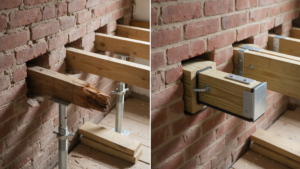
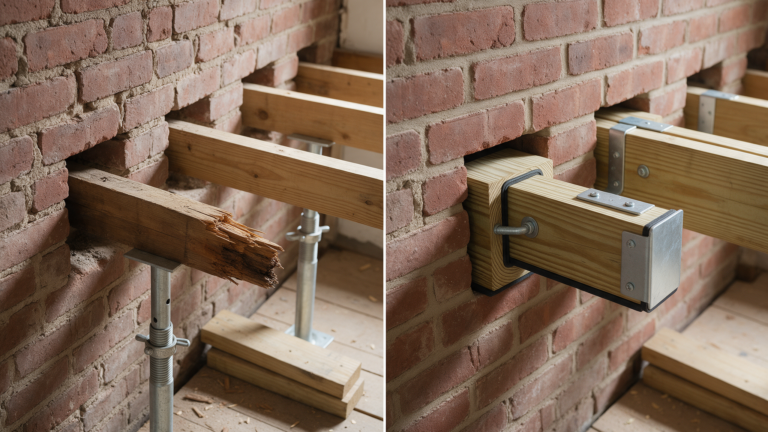
Older row-homes often carry wood floor joists into pockets in brick masonry. When moisture, age, or past repairs damage the joist end, the visible floor problem may be only the surface symptom of a bearing issue at the wall. For homeowners in South Philadelphia, Queen Village, Fish-town, and Port Richmond, this is the kind of detail that can decide whether a renovation or repair remains durable after the visible finish is complete.
The primary search intent behind joist end repair Philadelphia rowhome is practical: understand what the condition means, what should be checked before work proceeds, and how to avoid closing the assembly before the real cause is understood. The goal is not to over-complicate the project; it is to make the scope match the condition that is actually present.
Why This Detail Matters
The visible symptom is only one part of the decision. A contractor also needs to understand the amount of sound wood remaining before the masonry pocket, whether the pocket is damp, deteriorated, or packed with debris, and how those findings affect the surrounding work. Resolving those questions before finish work protects the new materials and helps keep a localized detail from turning into avoidable rework later.
What a Professional Checks
A professional review typically includes:
- The amount of sound wood remaining before the masonry pocket
- Whether the pocket is damp, deteriorated, or packed with debris
- How the adjacent joists and sub-floor are sharing load
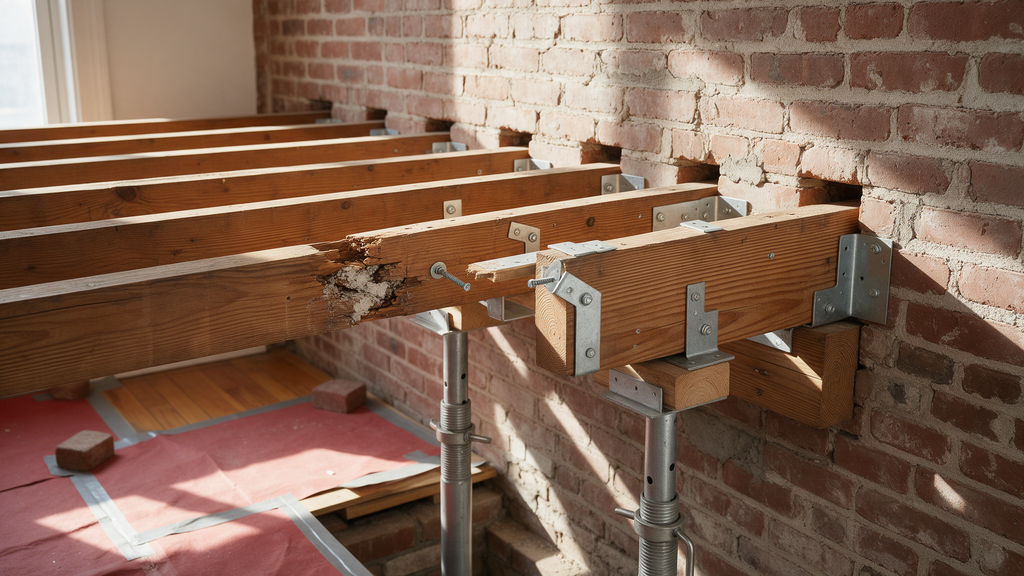
- Whether repair can remain localized or requires engineered reinforcement
How the Work Is Planned
A renovation team should expose only enough of the assembly to understand the bearing condition, protect the surrounding masonry, and coordinate any reinforcement before new ceilings or floors conceal the work. Repair details depend on the framing direction, joist size, remaining section, access, and whether the masonry itself is stable. The best result comes from coordinating the hidden construction with the finish requirements so one trade is not forced to undo another trade’s completed work.
This is where a focused commercial service page should receive the strongest internal support. Learn more about full home renovation and how the broader project can be coordinated around the condition described here.
Common Failure Points
A cosmetic floor patch or new finish layer can hide movement without correcting the failed bearing point. Another common mistake is replacing wood without addressing the moisture path that damaged the joist end in the first place. A strong scope separates a cosmetic correction from work that affects performance, access, drainage, structure, or serviceability.
When the Scope May Need to Expand
If multiple joists are affected, the masonry pocket has broken down, or the floor has significant movement, structural evaluation may be appropriate before the repair scope is finalized. That decision should be made before the area is covered, painted, tiled, sided, or otherwise treated as complete.
Reference: Philadelphia Department of Licenses and Inspections. Requirements and field conditions vary by project, so the applicable authority and project-specific professionals should guide final decisions.
Plan the Next Step
If you are planning a full renovation in a Philadelphia rowhome and demolition may expose framing or masonry conditions, Noam Construction can help define the scope, coordinate the trades, and determine when additional structural review is appropriate.